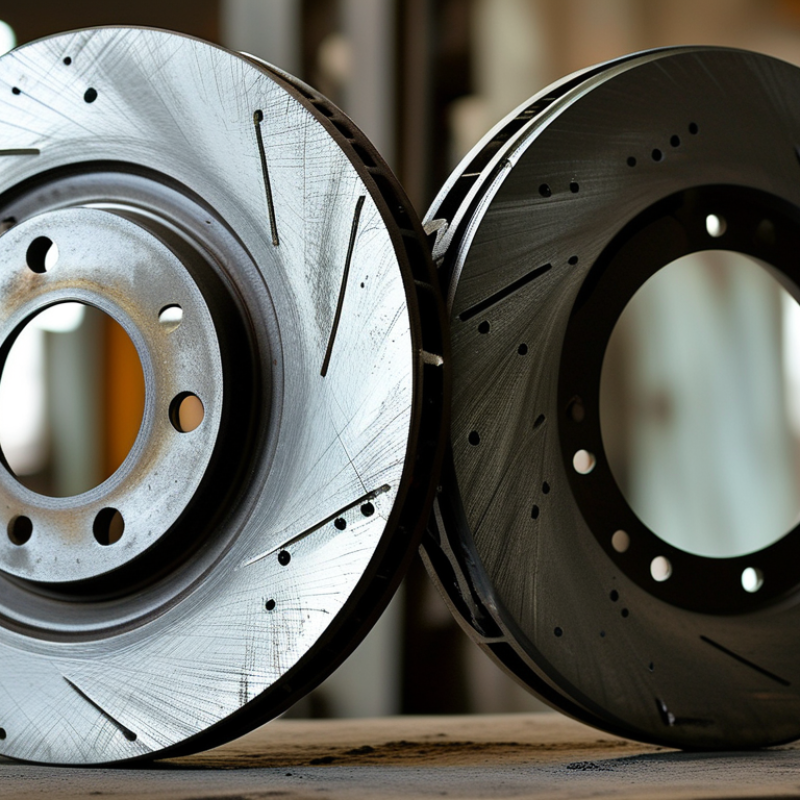
A brake rotor may look acceptable through a wheel opening, yet its surface can hide serious thickness variation. This problem often appears after repeated hard braking, heavy towing, seized calipers, or uneven wheel installation. The steering wheel may pulse. The brake pedal may move in small, unsettling waves. Stopping can become less smooth, less predictable, and more stressful.
Automotive brake specialist Andrew Markel explains, “Brake rotors do not warp; they develop thickness variation.” That distinction matters. It prevents rushed diagnosis and encourages proper measurement with a micrometer, dial indicator, and manufacturer specifications. Still, drivers commonly use the phrase what happens if you don't change warped rotors because the warning feels real. The consequences can include uneven pad wear, increased noise, longer stopping distances, and repeated vibration through the chassis. Not every vibration comes from the rotor. That is worth remembering.
This guide examines China’s top 10 rotor suppliers through a practical quality lens. It considers casting consistency, machining accuracy, heat treatment, corrosion protection, inspection procedures, and supply reliability. A low price means little if the rotor develops runout after a few hundred kilometers. Brand claims need evidence. Certifications need verification. Testing records matter more than polished catalogs.
A damaged rotor should not be ignored.
Choosing a replacement supplier also requires care. Fitment data, minimum thickness, balancing, packaging, and traceability deserve close attention. One overlooked detail can return the vehicle to the workshop. This review helps buyers compare suppliers with clearer expectations, while acknowledging an uncomfortable truth: even a reputable manufacturer cannot replace correct installation and disciplined inspection.
What Rotor Suppliers Are and Why They Matter in Industrial Systems
Rotor suppliers design and produce rotating components for motors, pumps, compressors, turbines, and other industrial systems. They manage material selection, machining, heat treatment, balancing, and final inspection. A rotor may look simple, but its performance depends on tiny details. Small imbalance matters.
In practical purchasing work, I examine dimensional reports, material certificates, balancing results, and traceability records. Experienced suppliers also understand shaft alignment, operating speed, temperature, and load conditions. These factors affect vibration, energy use, bearing life, and maintenance costs. Reliable suppliers do more than deliver metal parts. They provide technical communication when drawings change or field problems appear.
Changing suppliers can reduce cost, but it can also create hidden risks. A replacement rotor may match the drawing yet behave differently under heat or continuous speed. Tolerances, surface finish, and balancing methods may not be identical. I have seen projects focus too heavily on price and overlook installation time. That judgment can be wrong. A careful comparison should include production experience, inspection equipment, response time, and after-sales support. Factory visits and sample testing can reveal weaknesses that documents miss. Still, keeping the same supplier forever is not automatically safe. Performance should be reviewed with actual operating data, not habit. Cost is not everything.
How China’s Top 10 Rotor Suppliers Are Identified and Compared
Identifying China’s top ten rotor suppliers requires more than counting export volume. A serious review starts with verified production records, plant audits, and recent customer references. We examine rotor diameter, balancing accuracy, material traceability, machining capacity, and inspection equipment. Factory photos are not enough. Engineering depth matters.
Each supplier receives scores across quality, capacity, delivery stability, technical support, and total cost. We check tolerance reports, fatigue-test records, calibration dates, and corrective-action histories. Supplier comparisons must use the same standards. Otherwise, the ranking becomes misleading. A low price may hide longer setup times or higher rejection rates. We also review packaging details, such as shaft protection, moisture barriers, and shock indicators.
Field experience reveals problems that spreadsheets miss. A rotor may pass final inspection but arrive with damaged coating or unclear markings. Small errors matter. Site audits help, yet they remain limited samples. Public data can also be incomplete, especially for smaller manufacturers. That weakness deserves attention. Buyers who never review existing suppliers may miss better process control, shorter lead times, or improved technical support. The top ten should therefore be treated as a changing benchmark, not a permanent label. Performance should be rechecked after major equipment changes, quality incidents, or repeated delivery delays.
China's Top 10 Rotor Suppliers: How They Are Identified and Compared
The comparison uses an anonymized composite score based on five practical sourcing dimensions: manufacturing capacity, quality consistency, delivery reliability, customization capability, and export readiness. Each dimension is normalized to a 100-point scale.
Higher scores indicate stronger overall supplier readiness. Supplier labels are anonymized and represent comparative screening positions rather than company or brand names.
Key Differences in Quality, Technology, Pricing, and Production Capacity
Changing rotor suppliers is not a simple price decision. In factory audits, I compare shaft runout, balancing accuracy, material certificates, and rejection records. A low-cost rotor can create vibration, noise, and costly assembly delays.
The leading ten Chinese suppliers often differ in quality control. Some use automated balancing machines and traceable inspections. Others still depend heavily on manual checks. Technology also matters. Advanced suppliers provide high-speed testing, precision machining, and simulation-based designs. These features can improve motor efficiency and service life. However, equipment alone proves little. Request recent test data, sample reports, and process photos. Ask difficult questions.
Pricing differences usually reflect material grade, tooling, inspection depth, and order volume. The cheapest quotation may exclude packaging, tooling changes, or replacement support. I once reviewed a project where a low unit price hid repeated dimensional corrections. The final cost was higher. That mistake stayed with me.
Production capacity needs careful verification. A supplier may advertise large monthly output but lack enough skilled operators during peak seasons. Check machine counts, shift schedules, lead-time records, and subcontracting controls. A reliable supplier should explain how it handles urgent orders without reducing inspection standards. Changing suppliers can reduce risk, but changing too quickly can create new problems. Pilot orders, independent measurements, and clear acceptance standards reveal more than polished presentations.
Risks of Keeping Underperforming Rotor Suppliers in Your Supply Chain
Keeping an underperforming rotor supplier can quietly weaken your entire supply chain. A late rotor shipment may stop motor assembly, idle testing equipment, and leave finished housings stacked beside the production line. McKinsey’s 2020 supply-chain research found that major disruptions lasting one month or longer occur about every 3.7 years. It also estimated that such events could reduce profits by 45% over a decade. These figures make supplier dependence a financial risk, not only a purchasing problem.
The pressure is increasing. The International Energy Agency reported more than 14 million electric cars were sold globally in 2023, representing nearly one in five new cars. Rotor demand is growing with that market. A supplier that repeatedly misses runout, balance, coating, or delivery targets can create expensive rework and unstable output. Quality teams should review capability studies, corrective-action closure rates, and lot-level traceability. Procurement should also measure recovery time after a tooling failure. Numbers reveal more than promises.
Still, changing suppliers is not automatically safer. New tooling may introduce dimensional drift, unclear process ownership, or another learning curve. I have seen teams approve a replacement after one strong sample lot, then discover inconsistent magnet retention during volume production. That mistake deserves reflection. A controlled dual-source trial, witnessed audits, and parallel validation can expose weaknesses before they reach customers. Waiting for another missed shipment is rarely a neutral decision.
China Top 10 Rotor Suppliers What If You Dont Change Them? - Risks of Keeping Underperforming Rotor Suppliers in Your Supply Chain
| Supplier Segment |
On-Time Delivery |
Defect Rate
(PPM) |
Average Lead Time
(Weeks) |
CAPA Closure
(Days) |
Capacity Buffer |
Change-Notice
Compliance |
Supply-Chain Risk |
Primary Risk if Retained |
| Segment 01 — High-volume standard rotors |
82% |
1,850 |
8.0 |
42 |
5% |
Low |
Critical |
Line stoppages and expedited freight caused by unstable deliveries. |
| Segment 02 — Precision-balanced rotors |
88% |
1,120 |
10.5 |
35 |
8% |
Partial |
High |
Balancing variation may increase vibration, noise, and field-return exposure. |
| Segment 03 — High-speed motor rotors |
79% |
2,400 |
12.0 |
50 |
3% |
Low |
Critical |
Rotor failure risk can create safety concerns and expensive warranty claims. |
| Segment 04 — Laminated rotor assemblies |
86% |
980 |
9.5 |
31 |
7% |
Partial |
High |
Material and lamination inconsistencies can reduce efficiency and service life. |
| Segment 05 — Automotive-grade rotors |
84% |
1,670 |
11.0 |
46 |
4% |
Low |
Critical |
Nonconformities may trigger additional inspections, containment, and recall exposure. |
| Segment 06 — Small-batch customized rotors |
87% |
1,300 |
13.0 |
39 |
6% |
Partial |
High |
Long requalification cycles can delay engineering changes and new-product launches. |
| Segment 07 — Export-oriented rotor suppliers |
89% |
760 |
14.0 |
28 |
9% |
Partial |
High |
Port congestion, customs delays, and extended replenishment cycles increase inventory needs. |
| Segment 08 — Low-cost commodity rotors |
81% |
2,050 |
7.5 |
44 |
5% |
Low |
Critical |
Apparent unit-cost savings may be offset by scrap, rework, sorting, and downtime. |
| Segment 09 — Electrified-powertrain rotors |
90% |
690 |
15.0 |
33 |
10% |
Partial |
High |
Insufficient process control can affect efficiency, thermal performance, and qualification status. |
| Segment 10 — Single-source strategic rotors |
85% |
1,540 |
16.0 |
41 |
2% |
Low |
Critical |
Lack of an approved alternative creates prolonged recovery time after disruption or quality failure. |
Benchmark interpretation: The table uses anonymized supplier segments and procurement-performance benchmarks rather than company or brand data. PPM means defective parts per million; CAPA means corrective and preventive action. Performance below 95% on-time delivery, above 1,000 PPM, or with less than 10% capacity buffer should normally trigger a supplier-improvement or dual-sourcing review.
When and How to Change Rotor Suppliers Without Disrupting Operations
China’s top ten rotor suppliers may look similar on paper, but operational needs change over time. A supplier change becomes necessary when delivery delays, unstable balancing, rising defect rates, or weak technical support affect production. Timing matters. Do not wait for repeated failures. Review rotor performance, inspection records, lead times, and service response every quarter. A qualified replacement should match material specifications, dimensional tolerances, dynamic balance, heat treatment, and packaging requirements.
Tips:
Start with a written risk assessment. Request samples and complete dimensional checks before approval. Test vibration, noise, temperature, and endurance under real working conditions. Keep limited safety stock during the transition. Use dual sourcing for critical rotors until the new supplier proves stable. Inform maintenance and quality teams early. Small details matter.
Change suppliers in controlled stages, not during peak production. Run a pilot batch beside existing inventory, then compare failure rates and installation time. Confirm traceability documents and corrective-action procedures. A controlled change reduces surprises. In practice, teams sometimes trust a low price too quickly. That is a mistake worth admitting. A supplier with excellent samples may still struggle with volume consistency. Recheck performance after three and six months. Record every deviation, even minor scratches or packaging damage, because small signals often appear before larger operational problems.
Conclusion
Rotor suppliers play a critical role in industrial systems because rotor quality affects equipment balance, efficiency, durability, and operational safety. This article explains how China’s top 10 rotor suppliers can be identified and compared through manufacturing expertise, material control, testing procedures, technological capability, pricing, delivery reliability, and production capacity. It also highlights why supplier evaluation should go beyond cost, as consistent quality and responsive technical support can significantly influence long-term performance.
Keeping an underperforming supplier may lead to vibration, premature wear, unexpected maintenance, production delays, and rising operating expenses. A key question for equipment managers is: what happens if you don't change warped rotors? The answer may include unstable operation, damage to connected components, and greater downtime. To reduce these risks, companies should review performance data, qualify alternative suppliers, test samples, confirm specifications, and introduce changes through phased orders and contingency planning. This approach allows businesses to improve rotor quality and supply-chain resilience without unnecessarily disrupting ongoing operations.
 Nittanya Auto
