Nittanya Auto
Nittanya Auto
Nittanya Auto
Precision Engineered Systems for Track, Fleet, and Street Applications

Qingdao Nittanya Auto Co., Ltd. — Pioneering Advanced Friction Metallurgy
Qingdao Nittanya Auto Co., Ltd. stands at the forefront of automotive safety and precision engineering, operating as a professional manufacturer and exporter specializing in premium braking system components. Our core focus centers on the research, development, and high-volume manufacture of high-performance brake discs, heavy-duty brake drums, durable brake hubs, and advanced mechanical interfaces. Headquartered in Qingdao, China—a premier global logistics and port metropolis—Nittanya Auto capitalizes on unparalleled maritime and land-based supply chain routes, guaranteeing reliable distribution networks to strategic global markets.
Since inception, Nittanya Auto has dedicated itself to delivering premium, high-safety components to global OE assemblies and the premium international aftermarket. Through persistent metallurgical innovation, advanced digital manufacturing systems, and active structural optimization, the company has consolidated its footprint across Europe, North America, South America, Africa, the Middle East, and the Asia-Pacific region. Our production assets integrate modern automatic sand casting processes, high-speed CNC precision machining stations, dynamic balanced detection, and complex laboratory inspections, securing a manufacturing output that exceeds one million units annually.
A driving force behind Nittanya Auto’s market resilience is our dedicated research and engineering division. This specialized team is geared toward materials engineering, surface treatment, and structural analysis. We actively manage a catalog exceeding 1,000 models, built to fit European, American, Japanese, and Korean vehicle platforms. Guided by our pillars of excellent quality, competitive pricing, timely delivery, and professional service, Qingdao Nittanya Auto Co., Ltd. continues to advance critical partnerships in automotive technology across the globe.


Note on Electro-Mechanical Engineering Integration: Nittanya Auto integrates SMT, AOI, and wave soldering lines alongside mechanical grey iron casting. This combined approach allows us to manufacture complex electronic components, integrated EPB actuators, and smart speed-wear sensor rings, ensuring compatibility with modern electronic braking systems.
Technical Challenges, Market Shifts, and Structural Transitions
The global automotive braking landscape is undergoing structural changes driven by the rise of electric powertrains, stringent environmental standards, and the demands of heavy logistics. In light-duty and passenger vehicles, the shift toward battery electric vehicles (BEVs) has introduced new challenges for braking systems. While regenerative braking handles initial deceleration, the friction brakes must handle high torque loads under extreme conditions due to increased battery weight. This demands brake discs with superior thermal capacities and thermal-crack resistance.
Concurrently, the heavy commercial logistics sector relies on heavy-duty diesel engines to sustain cross-border supply chains. Vehicles such as the MAN TGA/TGS/TGX series or the SINOTRUK and BPW trailer classes require durable drum and disc designs. Long mountain descents under full load generate sustained thermal energy, leading to thermal expansion and brake fade. Therefore, the selection of raw materials, chemical carbon content, and mechanical tolerances are critical parameters for the safety of commercial transport.
Innovations in Carbon Ceramics, High-Carbon Alloys, and Floating Technology
Utilizing premium grey iron (GG20HC/GG15HC) with elevated carbon content (3.6% - 3.9%). This molecular structure enhances thermal conductivity, dampens vibration, and prevents brake squeal and disc thickness variation (DTV).
Designed for motorsport and high-performance vehicles, this material combines carbon fibers and silicon carbide matrixes. It delivers extreme heat tolerance, reduces unsprung mass by up to 60%, and virtually eliminates thermal deformation.
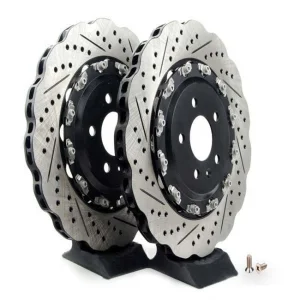
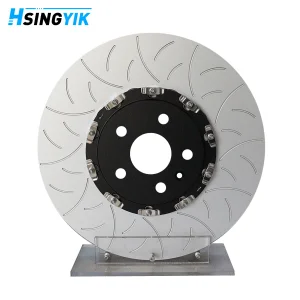
By coupling an 6061-T6 aluminum center hat to a high-carbon iron ring via stainless steel drive pins, this design allows radial expansion without warping. This layout minimizes stress concentration under extreme thermal cycles.
The manufacturing process begins with precise controls in the foundry. Liquid iron chemistry is closely monitored via spectrometers to ensure the ratio of carbon, silicon, manganese, chrome, and copper stays within target tolerances. Our automated casting lines yield low porosity and uniform graphite structure, which are critical for mechanical strength.
Machining is performed on computerized CNC cells, ensuring plane parallel alignment and minimizing lateral runout to under 0.015mm. The braking surface is finished with cross-hatched grinding patterns to assist in pad bedding and accelerate consistent coefficient of friction development. Final quality audits verify dynamic balance tolerances to prevent steering wheel vibrations at highway speeds.
Optimized Solutions Tailored for Dynamic Environments
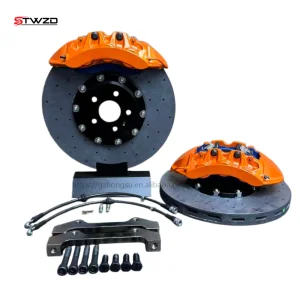
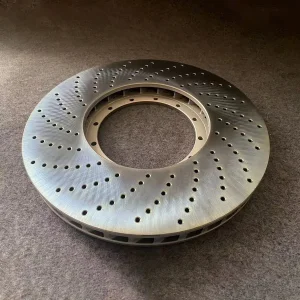
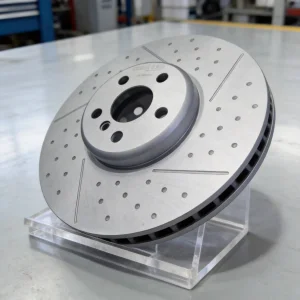
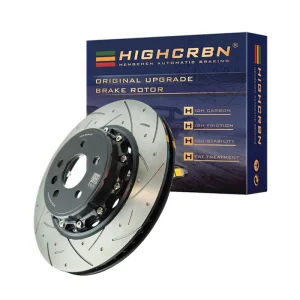
For sports platforms like the Chevrolet Camaro ZL1 or performance BMW configurations, ventilated, slotted, and cross-drilled rotors help escape boundary layer gases and pad debris. This keeps the friction interface clean under heavy, repeated deceleration cycles.
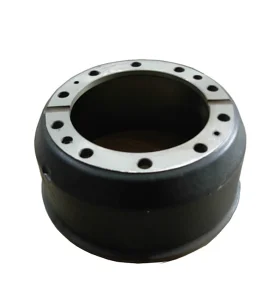
Commercial vehicles require durable brake drum systems (e.g., MAN Front Drums, SINOTRUK and BPW trailer axes) that resist heat cracking and wear. Proper casting thickness is critical to handle sustained mechanical brake actuation on long descents.
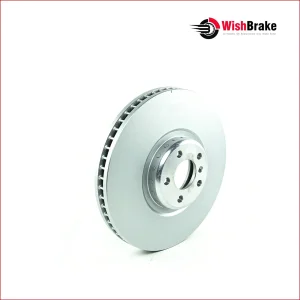
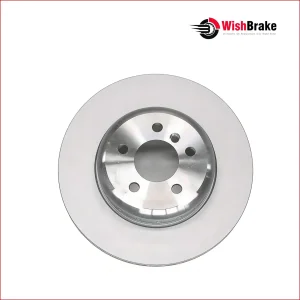
In coastal regions or northern climates where road salts are common, standard rotors face rust and oxidation. Our Geomet-coated brake discs provide thin-film zinc-aluminum protection, preventing corrosion and preserving heat dissipation paths.
Innovating to Meet the Demands of Next-Generation Transportation
Developing low-dust carbon-ceramic formulations and copper-free friction coatings to comply with environmental regulations and prevent brake-dust runoffs into waterways.
Advancing structural bi-metal and co-cast technologies to link steel friction rings with lightweight alloy hats, optimizing unsprung weight in mid-to-high range electric vehicles.
Integrating temperature, wear, and structural stress sensors directly into the rotor. This allows real-time diagnostics for autonomous fleets and advanced driver assistance systems.
Operational Excellence from Raw Material to Global Distribution
Qingdao Nittanya Auto Co., Ltd. utilizes the industrial benefits of its geographic location to secure a stable and efficient supply chain. Situated close to the Port of Qingdao—one of the largest deep-water ports globally—our shipping logistics connect directly to major international shipping routes. This proximity minimizes inland freight transit, reduces carbon footprints, and shields clients from shipping delays.
Our raw material procurement is supported by local long-term partnerships with metal refiners, ensuring a steady supply of high-grade pig iron and alloys. This integration protects our production against volatility in metal markets. By maintaining stock of key inputs and automating our casting lines, we reliably meet high-volume orders for global distributors, keeping lead times short even during peak seasons.
Engineering Safety with Global Certifications
Every replacement rotor configuration is engineered to match or exceed OE specifications within ±15% of the original part, satisfying European performance and safety guidelines.
Our production facilities run under a structured quality management system. From casting pouring temperatures to packaging box inspections, every process is documented and traceable.
Using computer-controlled dynamic balancing machines, we minimize residual unbalance to prevent brake shudder, pedal vibration, and uneven pad wear.
Deep Answers to Critical Engineering and Sourcing Queries
High-carbon brake discs contain a higher concentration of carbon (typically 3.6% to 3.9% grey iron alloyed with silicon and manganese) compared to standard cast iron rotors (typically 3.1% to 3.4%). This elevated carbon content alters the graphite microstructure, enhancing thermal conductivity and heat capacity. This allows the disc to absorb and dissipate heat faster, reducing thermal stress. Additionally, high-carbon alloys help dampen NVH (Noise, Vibration, and Harshness), preventing brake squeal.
A 2-piece floating brake disc features an outer cast-iron friction ring connected to an inner aluminum alloy hat via floating pins or bobbins. This configuration offers three key benefits:
1. Reduced Weight: The aluminum hat is lighter than cast iron, reducing unsprung mass and rotational inertia for sharper steering response.
2. Thermal Isolation: It limits heat transfer from the friction ring to the wheel hub and bearings, protecting delicate electronics.
3. Anti-Warping: The floating design allows the iron ring to expand radially when heated, preventing thermal warping and cone distortion.
Traditional rotors are shipped with anti-rust oil that must be cleaned off before installation. Geomet is a water-based zinc-aluminum dispersion coating baked onto the entire rotor surface. It provides clean handling and excellent corrosion protection, surviving up to 400 hours of salt spray testing. The coating also preserves heat-transfer surfaces (vents and hats) from rust scaling, which could otherwise act as an insulator and cause thermal buildup.
Pedal pulsation is primarily caused by DTV (Disc Thickness Variation) and lateral runout. When the rotor's braking faces are not parallel, the brake pads press unevenly, causing hydraulic pulsation in the pedal. Nittanya Auto prevents this by using advanced CNC machining cells that grind both friction faces simultaneously. This keeps runout under 0.015mm and thickness variation under 0.008mm, ensuring a flat, parallel surface.
Yes. We offer OEM/ODM services supported by our engineering team. We can work from customer-provided drawings, physical OEM samples, or 3D CAD files. Our processes support custom vane patterns, slotted/drilled options, specific metallurgy grades (e.g., GG15HC, GG20HC, carbon ceramic matrices), and customized packaging, meeting target specifications for both performance upgrades and commercial fleet applications.
Durable Designs for Commercial Vehicles, Off-Road Platforms, and Premium Sedans